Posts Tagged: Poetry

A song and its music set to photographs

Ragged Light Of The Evening
Malcolm Guite

I could make a bonfire of our vanity
Wouldn’t smoke out your memory
Something’s alight at the heart of that fire
You walk towards me through the ghosts of desire.

Hidden hearts still call to each other
But when you fall there's no return
If I ever learn to call you my lover
I do believe my tongue would burn.

You changed like an angel on the edge of my sight
The gift of your love was just a trick of the light
I still feel your touch in the shimmering rain
I'd rather be buried than feel that again.

Yes I brought you everything I believed in
Only to find the god withdrawn
I let you love me in the ragged light of the evening
But I loved you in the whisky light of dawn.

We walked together to the very edge
We kicked aside the last minute bridge
For all the years we've both fallen through
I still tremble on that brink with you.

Hidden hearts still call out to each other
But when you fall there's no return
If I ever learn to call you my lover
I do believe my tongue would burn.

You can tone down the colours, you can fade it to grey
You can move to the border where time fades away
Bury the feelings, scrub out the stain
In the blink of an eye it’s vivid again.

I brought you everything I believed in
Only to find the god withdrawn
I let you love me in the ragged light of the evening
And leave me in the whisky light of dawn.

From the album "The Green Man and other songs"
Copyright © Malcolm Guite 2007
Cambridge Riffs Records
www.cambridgeriffs.co.uk/records

Holy Cross Day

I am borrowing Malcolm Guite's description of Holy Cross Day and one of his poems from the Sonnets of the Cross in Sounding the Seasons; seventy Sonnets for the Christian Year Canterbury Press 2012

"Today, is Holy Cross day. It originally commemorated the day when Helena the Mother of Constantine was believed to have found the true cross, astonishing the inhabitants of Jerusalem by searching the rubbish tip of Golgotha and, on unearthing this discarded sign of shame, exalting it as the greatest treasure on earth. But this festival has become since then a day when any of us can again find the cross, still a discarded sign of shame, and find in it the greatest treasure and the source of grace."

The painting is by Alexandra Drysdale

p1030770bsmall

A sonnet by Malcolm Guite on Holy Cross Day

I JESUS IS GIVEN HIS CROSS

He gives himself again with all his gifts
And now we give him something in return.
He gave the earth that bears, the air that lifts,
Water to cleanse and cool, fire to burn,
And from these elements he forged the iron,
From strands of life he wove the growing wood,
He made the stones that pave the roads of Zion
He saw it all and saw that it is good.
We took his iron to edge an axe’s blade,
We took the axe and laid it to the tree,
We made a cross of all that he has made,
And laid it on the one who made us free.
Now he receives again and lifts on high
The gifts he gave and we have turned awry.

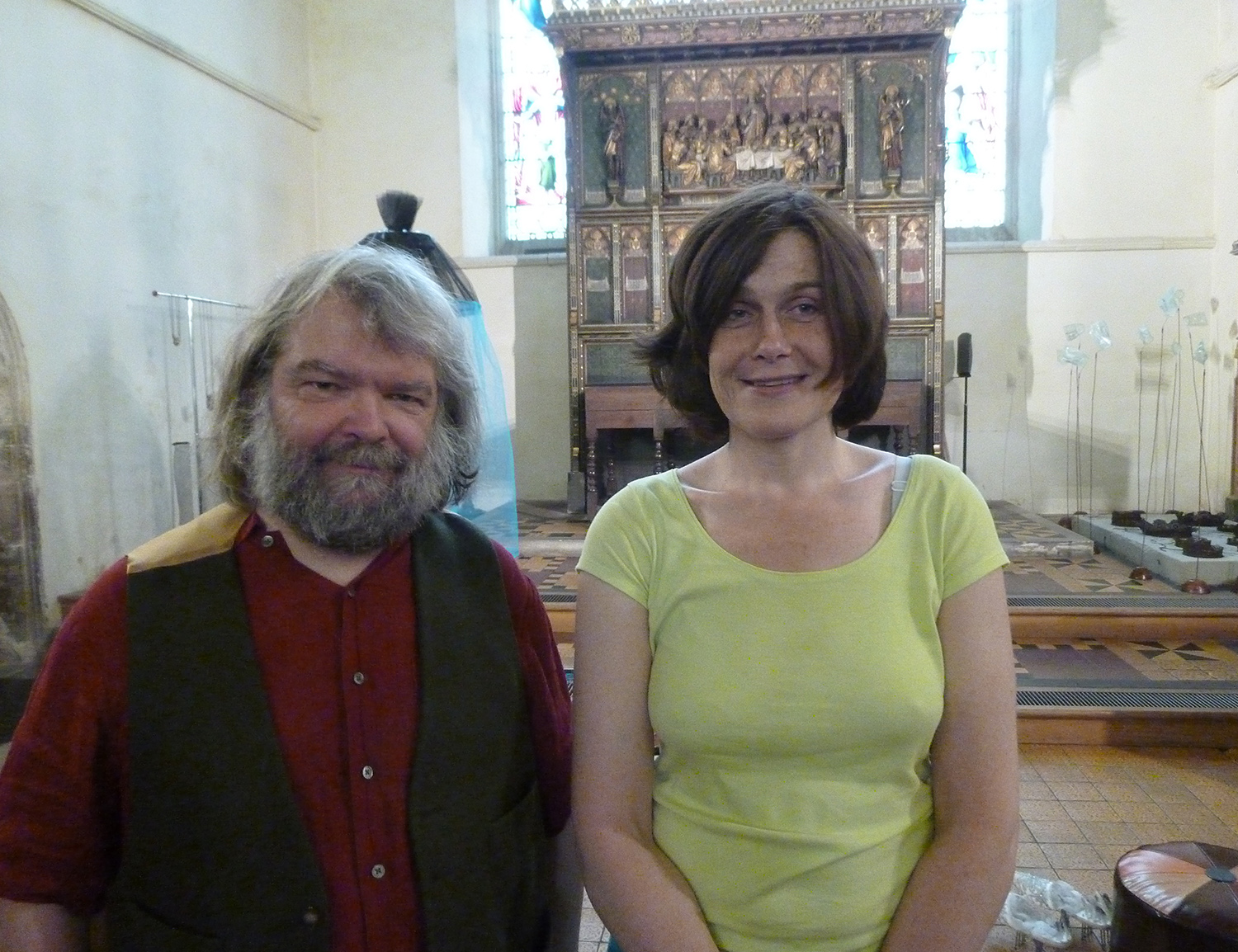
p1030799smMalcolm Guite, the poet and Alexandra Drysdale, the painter. Michaelhouse, Cambridge, Easter 2011

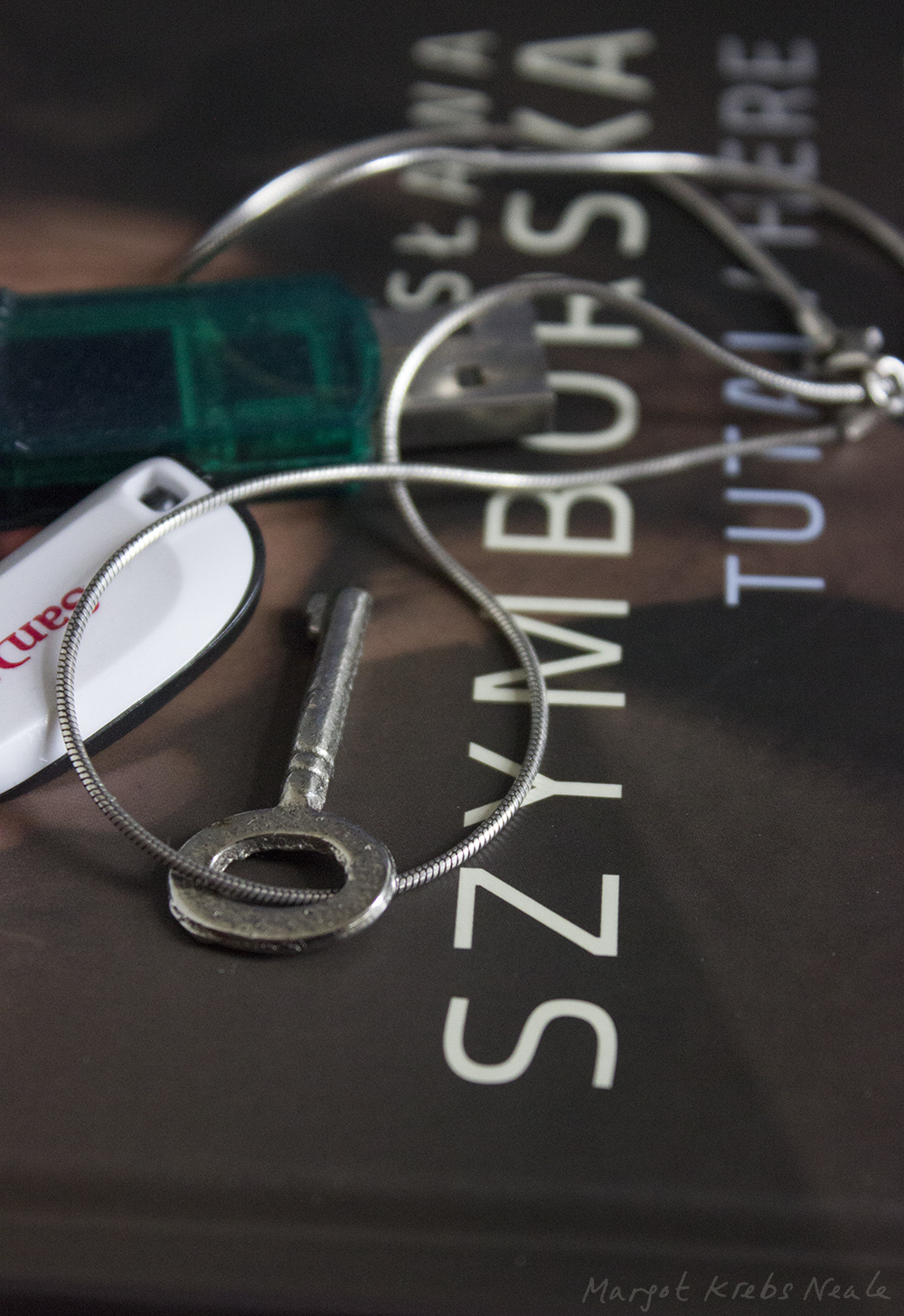
Sny – Dreams WISŁAWA SZYMBORSKA

Rita; washington DC25aSNY

SNY

Wbrew wiedzy i naukom geologów,
kpiąc sobie z ich magnesów, wykresów i map –
sen w ułamku sekundy
piętrzy przed nami góry tak bardzo kamienne,
jakby stały na jawie.

A skoro góry, to i doliny, równiny
z pełna infrastrukturą.
Bez inzynierów, majstrów, robotników,
bez koparek, spycharek, dostawy budulca –
gwałtowne autostrady, nagłe mosty,
natychmiastowe miasta zaludnione gęsto.

Bez reżyserów z tubą i operatorów –
tłumy dobrze wiedzące, kiedy nas przerazic
i w jakiej chwili zniknąć.

Bez biegłych w swoim fachu architektów,
bez cieśli, bez murarzy, betoniarzy –
na scieżce raptem domek jak zabawka,
a w nim ogromne sale z echem naszych kroków
i ściany wykonane z twardego powietrza.

Nie tylko rozmach ale i dokładność –
poszczególny zegarek, calkowita mucha,
na stole obrus haftowany w kwiaty,
nadgryzione jabłuszko ze śladami zębów.

A my – czego nie mogą cyrkowi sztukmistrze,
magowie, cudotwórcy i hipnotyzerzy –
nieupierzeni potrafimy fruwać,
w czarnych tunelach świecimy sobie oczami,
rozmawiamy ze swadą w nieznanym języku
i to nie z byle kim, bo z umarłymi.

A na dodatek, wbrew własnej wolności,
wyborom serca i upodobaniom,
zatracamy się
w miłosnym pożądaniu do –
zanim zadzwoni budzik.

Co na to wszystko autorzy senników,
badacze onirycznych symboli i wróżb,
lekarze z kozetkami do psychoanaliz –
jeśli coś im się zgadza,
to tylko przypadkiem
i z tej tylko przyczyny,
że w naszych śnieniach,
w ich cieniach i lśnieniach,
w ich zatrzęsieniach, niedoprzewidzeniach,
w ich odniechceniach i rozprzestrzenieniach
czasem nawet uchwytny sens
trafić się może.

(Krakow, 2009.)

Wisława Szymborska

DREAMS

Despite the geologists’ knowledge and craft,
mocking magnets, graphs, and maps—
in a split second the dream
piles before us mountains as stony
as real life.

And since mountains, then valleys, plains
with perfect infrastructures.
Without engineers, contractors, workers,
bulldozers, diggers, or supplies—
raging highways, instant bridges,
thickly populated pop-up cities.

Without directors, megaphones, and cameramen—
crowds knowing exactly when to frighten us
and when to vanish.

Without architects deft in their craft,
without carpenters, bricklayers, concrete pourers—
on the path a sudden house just like a toy,
and in it vast halls that echo with our steps
and walls constructed out of solid air.

Not just the scale, it’s also the precision—
a specific watch, an entire fly,
on the table a cloth with cross-stitched flowers,
a bitten apple with teeth marks.

And we—unlike circus acrobats,
conjurers, wizards, and hypnotists—
can fly unfledged,
we light dark tunnels with our eyes,
we wax eloquent in unknown tongues,
talking not with just anyone, but with the dead.

And as a bonus, despite our own freedom,
the choices of our heart, our tastes,
we’re swept away
by amorous yearnings for—
and the alarm clock rings.

So what can they tell us, the writers of dream books,
the scholars of oneiric signs and omens,
the doctors with couches for analyses—
if anything fits,
it’s accidental,
and for one reason only,
that in our dreamings,
in their shadowings and gleamings,
in their multiplings, inconceivablings,
in their haphazardings and widescatterings
at times even a clear-cut meaning
may slip through.

translation Clare Kavanah and Stanislaw Baranczak

Wisława Szymborska

hard lifesgsm

Trudne życie z pamięcią

Jestem złą publicznością dla swojej pamięci.
Chce, żebym bezustannie słuchała jej głosu,
a ja się wiercę, chrząkam,
słucham i nie słucham,
wychodzę, wracam i znowu wychodzę.

Chce mi bez reszty zająć uwagę i czas.
Kiedy śpię, przychodzi jej to łatwo.
W dzień bywa różnie, i ma o to żal.

Podsuwa mi gorliwie dawne listy, zdjęcia,
porusza wydarzenia ważne i nieważne,
przywraca wzrok na prześlepione widoki,
zaludnia je moimi umarłymi.

W jej opowieściach jestem zawsze młodsza.
To miłe, tylko po co bez przerwy ten wątek.
Każde lustro ma dla mnie inne wiadomości.

Gniewa się, kiedy wzruszam ramionami.
Mściwie wtedy wywleka wszystkie moje błędy,
ciężkie, a potem lekko zapomniane.
Patrzy mi w oczy, czeka, co ja na to.
W końcu pociesza, że mogło być gorzej.

Chce, żebym żyła już tylko dla niej i z nią.
Najlepiej w ciemnym, zamkniętym pokoju,
a u mnie ciągle w planach słońce teraźniejsze,
obłoki aktualne, drogi na bieżąco.

Czasami mam jej towarzystwa dosyć.
Proponuję rozstanie. Od dzisiaj na zawsze.
Wówczas uśmiecha się z politowaniem,
bo wie, że byłby to wyrok i na mnie.

Wisława Szymborska

Hard Life with Memory

I’m a poor audience for my memory.
She wants me to attend her voice non-stop,
but I fidget, fuss,
listen and don’t,
step out, come back then leave again.

She wants to take up all my time and attention.
She’s got no problem when I sleep.
The day’s a different matter, which upsets her.

She thrust old letters, snapshots at me eagerly
stirs up events both important and un-,
turns my eyes to overlooked views,
peoples them with my dead.

In her stories I’m always younger.
Which is nice, but why always the same story.
Every mirror holds different news for me.

She gets angry when I shrug my shoulders.
And takes revenge by hauling out old errors,
weighty, but easily forgotten.
Looks into my eyes, checks my reaction.
Then comforts me, it could be worse.

She wants me to live only for her and with her.
ideally in a dark, locked room,
but my plans still feature today’s sun,
clouds in progress, current roads.

At times I get fed up with her.
I suggest a separation. From now to eternity.
Then she smiles at me with pity,
since she knows it would be the end of me too.

translation Clare Kavanah

What They Did Yesterday Afternoon

What They Did Yesterday Afternoon

they set my aunts house on fire
i cried the way women on tv do
folding at the middle
like a five pound note.
i called the boy who used to love me
tried to ‘okay’ my voice
i said hello
he said warsan, what’s wrong, what’s happened?

i’ve been praying,
and these are what my prayers look like;
dear god
i come from two countries
one is thirsty
the other is on fire
both need water.

later that night
i held an atlas in my lap
ran my fingers across the whole world
and whispered
where does it hurt?

it answered
everywhere
everywhere
everywhere.

Warsan Shire

IMG_7144sgsm

BOTH NEED WATER

Women’s day

À la magicienne

At the Woman-Magician’s

IMG_1691 ppSMSG

This is a poem inspired by a corset lace I found in my great-aunt’s attic never used with the price still on it. The brand name is “At the magician’s” (magician in the feminine).

À la magicienne
Un corset
Un lacet
De quelle magie parlons-nous ?
De quelle magicienne ?

De celle qui opprime
Déprime
Contraint
Astreint
Ou de celle qui embellit
Affermit
Définit
Enrichit.

C'est peut-être un choix
A chaque fois
Savoir combien
Quel équilibre
On s'astreint
On retient ou on est libre.

At the Woman-Magician’s
A corset
Its lace
Which magic are we talking about?
Which She-magician?

The one who oppresses
Depresses
Constrains
Restrains
Or the one who gives beauty
Tightens
Strengthens
Defines

It may be a choice
Each time
To find the balance
Between
How much one controls
Or one lets breathe

This poem is part of the book To be a Woman which you can have a look at Here.

Chesterton Community College Drama

IMG_2305sgsm

Self-portrait for Ash Wednesday

ash-wed dust you are

Memento mori
For dust you are and to dust you shall return.

And so they did some of my loved ones
And so will I

Can I accept just not knowing anything about the after
Can I live with the descriptions other people have made
People who do not know
Or should I enter the dark world of sleeping I have experienced
And find a glimpse there.

A life real only for me, but oh so real
Mysterious, no doubt
Controlled, not in the least

I have written a poem to my father
About him asleep because
He had expressed a fear he might not wake up one day
In the poem I said “Fear not, it is not death yet”

This summer my father died
It is death now
As he lay unconscious, this time we knew he would not wake
He sighed so expressively when Sister Jeanine, a nun, spoke to him and for him
Saying “I know what it is you want…
And you can ask for it
But God will decide.”
Yes, my father was ready and willing
Let us pray that when the time comes however early or unexpected
We shall be ready and willing.

Margot Krebs Neale

Hommage à Michel Tournier

La leçon des ténères

Certaines nuits d’hiver, entre la deuxième et la troisième heure, alors que le soleil, séparé de moi par toute l’épaisseur de la terre, ne m’envoie plus à travers l’empire des ombres que des rayons noirs, je rencontre mes morts. Sur l’aire de lucidité aride créée par l’insomnie, ils forment une foule attentive et sans visage, les camarades tombés de mon enfance, les amis perdus de ma jeunesse, ceux d’avant-hier, ceux d’hier déjà.
Quelle est donc la leçon des ténèbres ? Que me veulent-elles, toutes ces silhouettes grises ? Qu’ont-elles à me souffler, ces bouches pleines de silence ? Il m’a fallu du temps pour le comprendre, pour l’accepter. Aujourd’hui, je le sais. Ils viennent me rappeler mon appartenance à leur communauté. Ils viennent me dire que je suis des leurs, et déjà mort en quelque sorte.
J’avais connu jadis une femme qui avait vécu entourée d’enfants, de petits enfants, de toute une cour familiale et affectueuse. Puis le malheur avait frappé autour d’elle avec un acharnement terrible, ayant toujours la suprême cruauté de l’épargner elle même, mais abattant à ses pieds des petits, des jeunes, tout ce qui était sa raison d’être.
Je craignais de retrouver une épave. C’était tout autre chose, le contraire en un certain sens. Elle souriait à tous, affable, attentionnée, légère, transparente, spirituelle, désincarnée. En vérité elle nous jouait une aimable comédie, mais elle n’était plus là pour personne de ce monde.
J’ai compris en la voyant qu’Ophélie n’a pas été rendue folle et suicide par l’assassinat de son père. Elle s’est simplement enfoncée avec lui dans les eaux lourdes, et seuls émergent encore ses yeux rêveurs et ses lèvres chantantes.
Etre jeune, c’est n’avoir perdu personne encore. Mais ensuite nos morts nous entraînent avec eux, et chacun est un rocher jeté dans notre mémoire qui fait baisser notre ligne de flottaison. A la fin, nous dérivons à fleur d’eau, à fleur d’existence, n’offrant plus aux vivants que juste ce qu’il faut de regards et de paroles pour leur faire croire que nous sommes de ce monde.

In Des Clefs et des Serrures

IMG_6143sgsm

Ils viennent me dire que je suis des leurs, et déjà mort en quelque sorte.

Aujourd’hui
Je cherche un beau poème
Un poème qui parle pour moi
Qui parle d’aujourd’hui

Mais pourquoi chercher
Il est là
En moi
Le poème qui dit la joie
De la lumière d’hiver
Et la tristesse
De la mort d’un frère

Frère parce que passionné de photo
Frère parce que touché par le beau
Frère parce qu’avec un stylo
Il a charmé, enrichi, approfondi ma vie.

Flawed blossom and Mary Oliver

IMG_1892sgsmMARY OLIVER

The Ponds - Mary Oliver